1
The project record, with footage
Every project we list links to the video we filmed of it, on our own YouTube channel. Nothing is retouched. If a claim looks thin to you, follow the link and judge it yourself — that is the entire point.
Sheikh Colony, Jhang Road · Faisalabad
We have installed solar across Faisalabad, from small homes to a one megawatt plant. Every project on this site links to the footage we filmed ourselves, so you can check it instead of taking our word for it. And because the rules for selling your surplus power changed in February 2026, we explain what that does to your bill before we quote you a price.
Your solar day — try it
What runs in the day
Season
On 9 February 2026 Pakistan replaced net metering with net billing. You still buy power at your full tariff, but any power you export is now bought at roughly Rs 11 a unit instead of cancelling your bill one for one. If a seller is still showing you 2024 economics, they are showing you a system that no longer works the way they think. Read the plain-English version → اردو میں پڑھیں
01 — What you can check here
Solar in Pakistan has a documented fraud problem. A Senate panel found over Rs 110 billion of fraud and money laundering across solar imports by 80 companies, and the FBR has filed cases against fake solar firms. That context shapes how we built this site.
1
Every project we list links to the video we filmed of it, on our own YouTube channel. Nothing is retouched. If a claim looks thin to you, follow the link and judge it yourself — that is the entire point.
2
Net billing changed the maths for everyone. We explain what you still paid for surplus, the 1 MW ceiling, the 250 kW load-flow rule, and why a system sized for last year's rules is now oversized by design.
3
Twelve checks you can run yourself — including us — before you pay anyone, drawn from the scams actually reported in this market. Tick them off on your phone. Print it and take it to the site visit.
4
The sliders at the top of this page show what an array would make, how much you would use, and what the February 2026 change costs you. We would rather size you correctly than size you large.
02 — Scale, stated plainly
Source: FESCO's published net-metering register, per-circle connection reports, all dated 14 April 2026. Faisalabad city 27,490 of FESCO's 38,730 total. Punjab Agriculture Department, Number of Tube Wells, Punjab 2024–25, for the tubewell figure.
This is a market where most buyers have already made their first decision, and most of them made it under rules that no longer exist. The work now is not generating demand. It is making sure the second decision is an informed one.
03 — The work, with the footage attached
Capacities below are as published by us in the video titles or on screen. Where we could not verify a figure independently, we say so on the project page rather than presenting it as established.
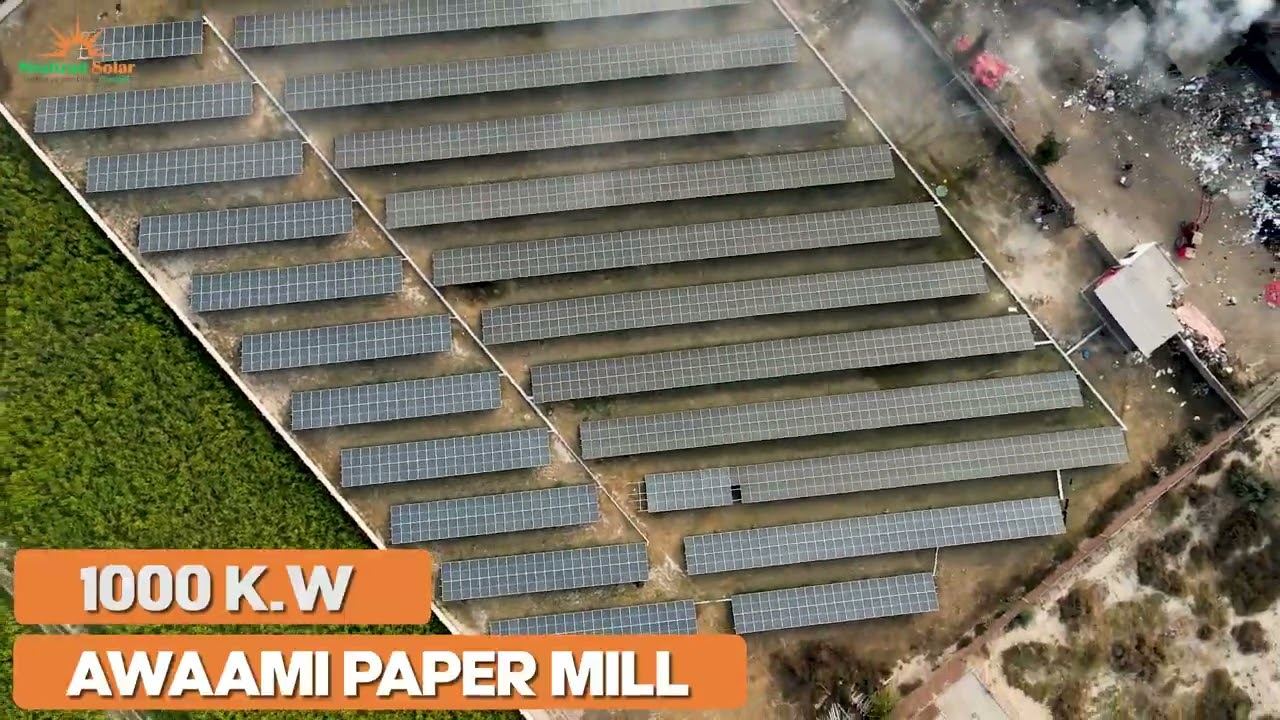 1,000 kWGround-mounted plant at Awami Paper Mill
Our largest published installation. The facade in our own footage reads 1000 K.W AWAAMI PAPER MILL, which is where the figure comes from. It sits at four times the top of the range on our C-3 certificate, and we say so on the project page.
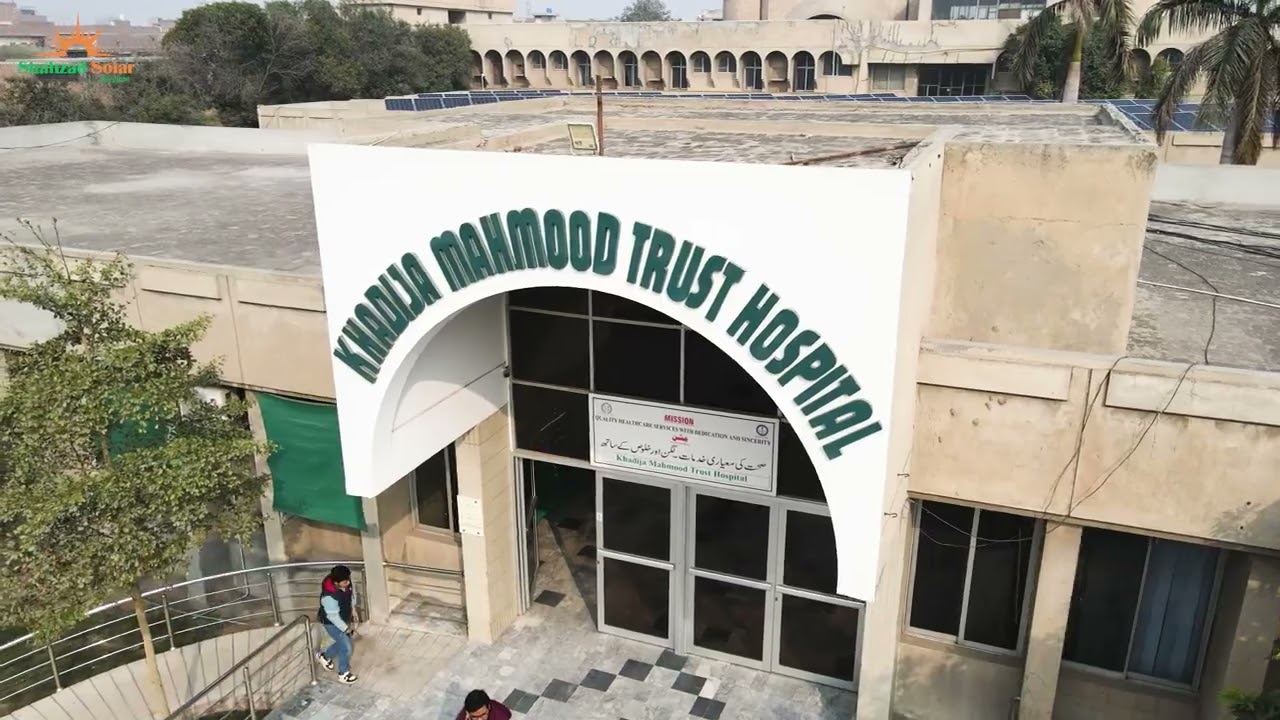 150 kWHospital canopy and rooftop
Canopy and rooftop array on a working hospital. The building name is legible in the footage; we use what is written there rather than what we used to write on our captions.
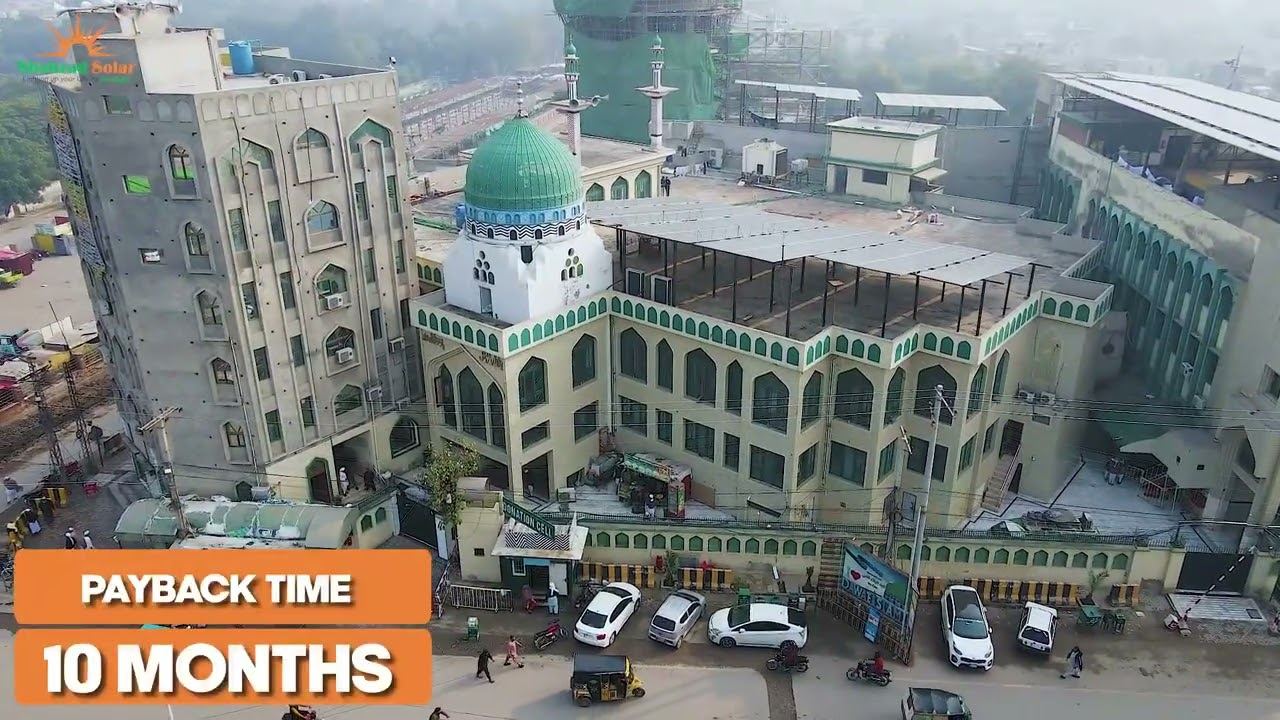 70 kWCommercial rooftop
A commercial rooftop in the city. Worth watching alongside the hospital job: it is a smaller system on a building that actually uses power during the day, which is the profile that works best under net billing.
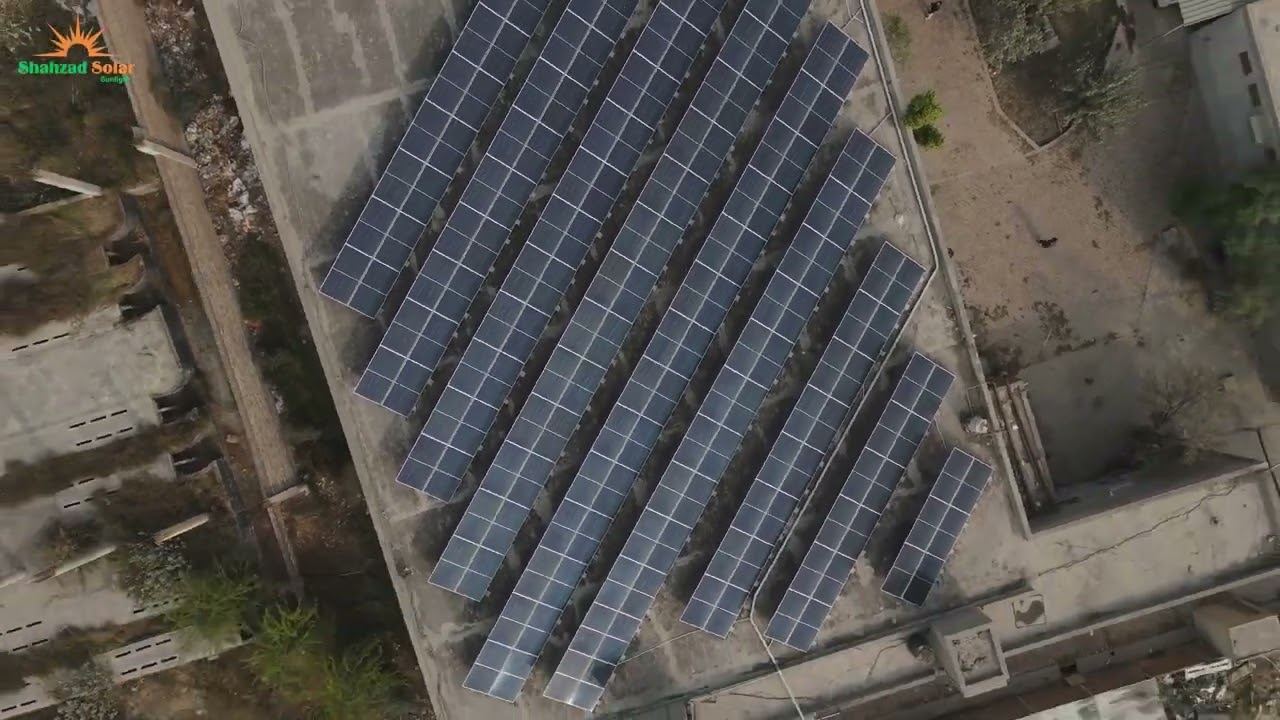 250 kWIndustrial, ground-mounted
A ground-mounted industrial array at the top of the range on our C-3 certificate. This is the one to watch if you are deciding between a rooftop and a ground mount.
04 — What we do
A 5 kW home and a 250 kW mill have nothing in common except that both are called "solar". What is right for one is wrong for the other, usually in opposite directions.
3 – 25 kW
The bulk of Faisalabad: 64% of net-metered connections here are 5 kW or under. Sized to your daytime load and your sanctioned connection, not to your roof.
10 – 100 kW
These are the winners under the new rules. A shop open from 9am to 9pm uses a large share of its power in the sun, so nearly every unit made is a unit it would otherwise buy at Rs 39.76.
100 – 250 kW
Textile is the load that defines this city. From 250 kW a load-flow study is compulsory before approval, and no application is entertained once distributed generation reaches 80% of a transformer's capacity.
Agriculture
22,384 diesel tubewells in this district against 482 government conversion slots. This is the one segment the February 2026 change never touched, and the arithmetic is the cleanest in the market.
05 — Straight answers
No. Anyone who tells you it will is telling you something false. Fixed charges still apply — roughly Rs 33 to Rs 35 per kW per month, with monthly minimums around Rs 75 to Rs 150 for a home, and Rs 2,000 a month on an agricultural connection even at zero consumption. You can cut a bill a long way. You cannot remove it.
Your distribution company decides, not us, and we will not promise you a date. The rules set minimum statutory steps — five working days to acknowledge, an initial review within fifteen, then seven each for concurrence and for the connection letter. Those are floors, not typical elapsed times. Reported real-world timelines in this market run two to four months, and rejection restarts the clock.
The smallest one that covers what you use in daylight, up to your sanctioned load. Regulation 3(2) now caps a facility at your sanctioned load, so the 1.5× sizing that used to be legal is not. The slider tool above will show you what a given size does on your own numbers, and it will tell you when you have made it too big.
No. We do not lend and we do not arrange third-party finance. Our structure is 30% against an itemised quote and an NTN invoice, 40% on delivery of equipment, and 30% after commissioning and handover. If you need a loan to buy solar, that is a separate conversation and we will not pretend otherwise.
It should be a clause in the contract, not a conversation afterwards. We put it in the quotation before you pay anything. If a supplier will not put a performance commitment in writing, that is the most useful thing you can learn about them before you sign, and it costs you nothing to ask.
Here is the awkward version. We appear in FESCO's published register of AEDB certified installers, category C-3, certificate CR/24/027/C-3, entry 16. The validity date on that certificate has passed, and the list was published with that date still showing. We print it exactly as it stands rather than describing ourselves as currently certified when we cannot prove it. The whole record is on our about page, including the part that is inconvenient for us.
06 — In their words
We were very satisfied with Shahzad Solar. They installed a 150 kW system for our hospital and the work was completed professionally. The team was polite and the quality of the installation was good. I would recommend them to anyone looking for solar installation.
We publish one review, not a wall of them. A gallery of testimonials is not evidence of anything; an address you can visit is. Come and see us, or ask us for the address of a system we have running and call the owner yourself.
Not a quote straight away. A size, with the reasoning behind it, and a straight answer if the honest one turns out to be "less than you were expecting" or "not yet".