Five installations · every one linked to our own footage

The record, including the parts we had to correct.

Anyone can show you a photograph of panels. The point of this page is that every claim below links to a video published on our own YouTube channel, so you can check it instead of taking our word for it. Where the footage and our published caption did not agree, we have changed the caption and said so.

Read this before the photographs. Two of the entries below are corrections to claims we have previously published, and one carries a performance figure we now think is wrong. We have left all three visible rather than quietly fixing them, because a project page with no corrections on it is a project page that has not been checked.

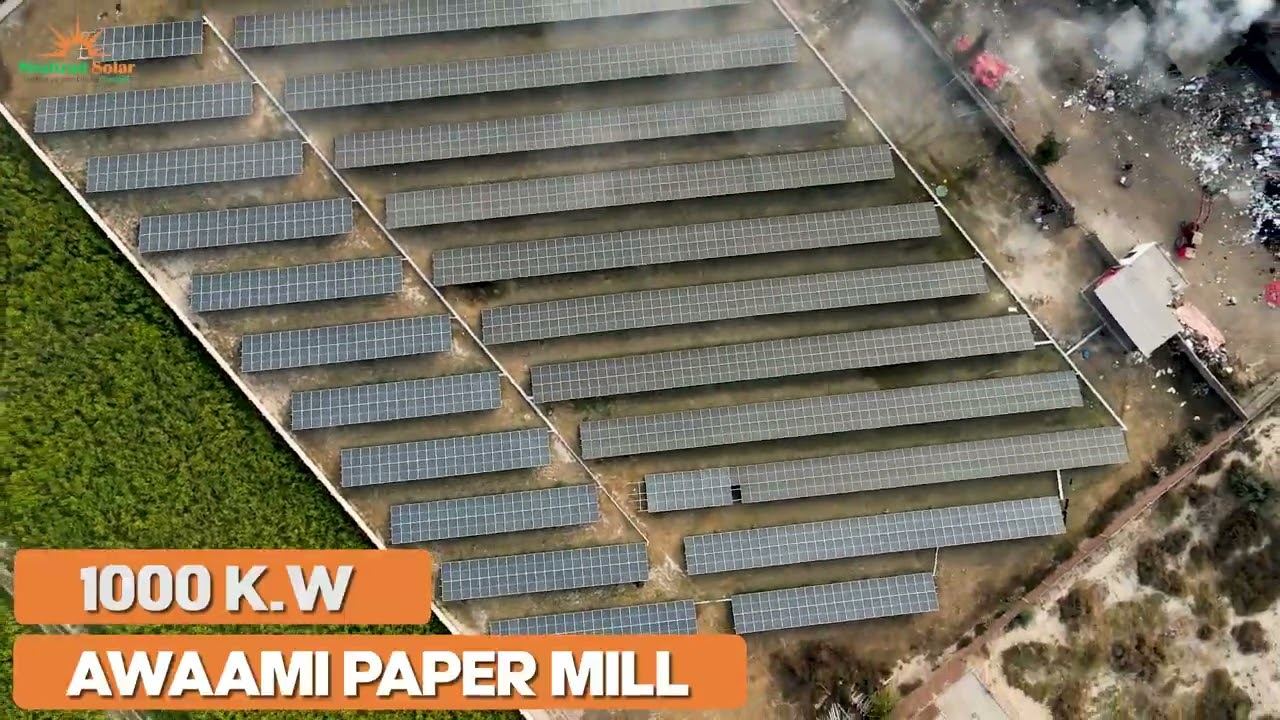
Aerial view of a large ground-mounted solar array beside mill buildings, with the sign reading 1000 K.W AWAAMI PAPER MILL

Ground-mounted · Industrial · Our largest published installation

1,000 kW, Awami Paper Mill

A ground-mounted plant beside a paper mill in Faisalabad. This is the largest system we publish, and it is the one that raises the hardest question about our own certification.

Correction we made. We previously described this as a generic "Faisalabad industrial" project. The building facade in our own footage reads 1000 K.W AWAAMI PAPER MILL. That is where the figure comes from, and it is a specific named plant at a specific mill — not an anonymous industrial site.

1,000 kW Ground mount 4× the range on our C-3 certificate

Watch the footage

What the footage establishes, and what it does not
The footage showsWe claimIt does not prove
A large ground-mounted array beside mill buildings; the facade reads "1000 K.W AWAAMI PAPER MILL" That a system of that stated size exists at a paper mill in Faisalabad Who installed it, on what date, or that it currently generates at its nameplate
A capacity figure of 1,000 kW published by us That this is our largest published installation That we are certified to build it. Our C-3 category covers up to 250 kW and we are not on the C-1 list.

Video published on our channel, titled "One Megawatt Project, Faisalabad", approximately 2025. The capacity is our own published figure; it has not been independently verified, and the certification question is addressed openly on our about page.
Canopy and rooftop · Healthcare

150 kW, Khaidija Mahmood Trust Hospital

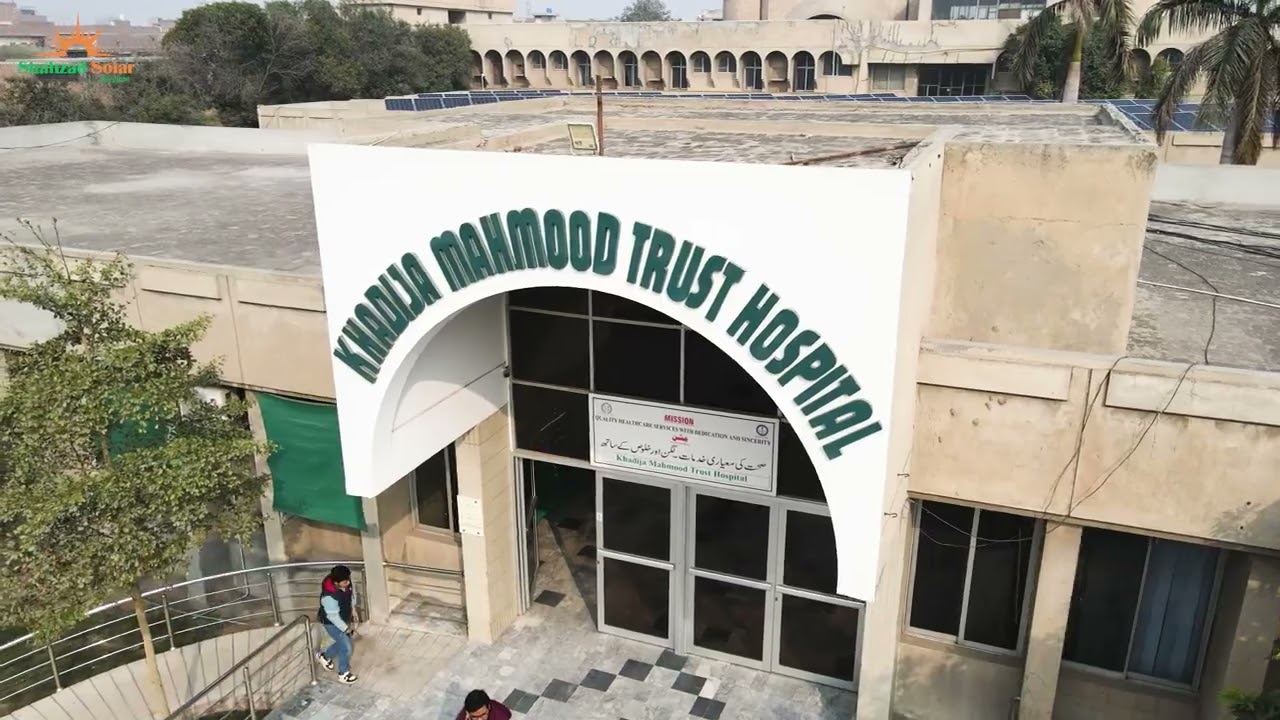
A canopy and rooftop array on a working hospital in Faisalabad. Of our published projects this is the one with the clearest documentary evidence, because the building name is legible in the footage itself.

Correction we made. We previously called this "Khadija Memorial Hospital". The facade in our own video reads KHAIDIJA MAHMOOD TRUST HOSPITAL. We now use the name that is written on the building. If you were told otherwise by us, you have our apology.

150 kW Canopy + rooftop Within our C-3 certificate range

Watch the footage

Solar panels installed on the entrance canopy and rooftop of a hospital building, with the hospital name visible on the facade
What the footage establishes, and what it does not
The footage showsWe claimIt does not prove
A hospital facade with the name KHAIDIJA MAHMOOD TRUST HOSPITAL, and panels over the entrance canopy and roof That a hospital of this name in Faisalabad has a solar canopy and rooftop array Any figure for the capacity, unless it appears on screen — which for this video it does not
A published capacity of 150 kW That this is within the 250 kW range on our AEDB C-3 certificate That the capacity figure has been independently verified

Video published on our channel, titled "Khadija Memorial Hospital, Faisalabad", approximately 2025. The building name above is transcribed from the footage, not from the video title, which is where our earlier error came from.

Rooftop solar array on a commercial building in Faisalabad, photographed from an upper storey

Rooftop · Commercial

70 kW, Faizan-e-Madina

A commercial rooftop array in the city, published in May 2025. Worth watching alongside the hospital job: it is a smaller system on a building that genuinely uses power during trading hours.

That matters more than it used to. Under net billing, a commercial site with daytime consumption keeps a much higher share of what it generates — the power is used on site at the full commercial tariff rather than sold at about Rs 11. (That Rs 11 is a Power Division figure reported in the press, not a number written in the gazette, which fixes the formula only — see the full explanation.) It is the profile the new rules reward.

70 kW Rooftop High self-consumption profile

Watch the footage

Video published on our channel, 5 May 2025, titled "Faizan-e-Madina, Faisalabad". Capacity is our published figure.

Ground-mounted · Industrial · Top of our C-3 range

250 kW, Faisalabad

A ground-mounted industrial array at exactly the top of the 250 kW range on our AEDB C-3 certificate: 250 kW. If you are weighing a rooftop against a ground mount, this is the video to ask questions about.

One rule to know if you are considering something this size: from 250 kW, a load-flow study is compulsory before approval, carried out through the distribution company or a consultant registered with the Pakistan Engineering Council. At exactly 250 kW you are on the threshold, so plan for it in your timeline and your budget.

250 kW Ground mount Load-flow study required

Watch the footage

Large ground-mounted solar array spanning the open yard of an industrial facility in Faisalabad

Video published on our channel, 3 May 2025, titled "Solar installation, Faisalabad". Capacity is our published figure. The load-flow requirement is Regulation 3(3) of S.R.O. 251(I)/2026.

The corrections

Two claims we published that the footage did not support.

Both of these were found by actually watching our own videos, which is the argument for linking to footage in the first place.

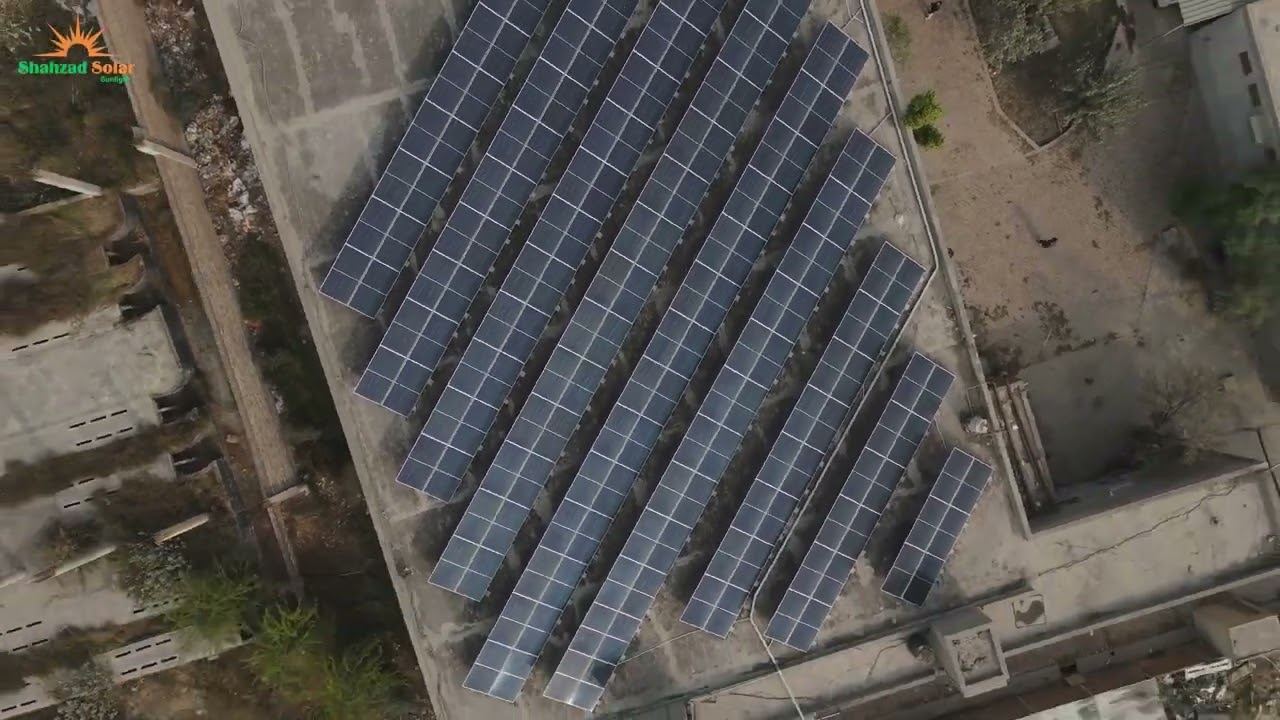
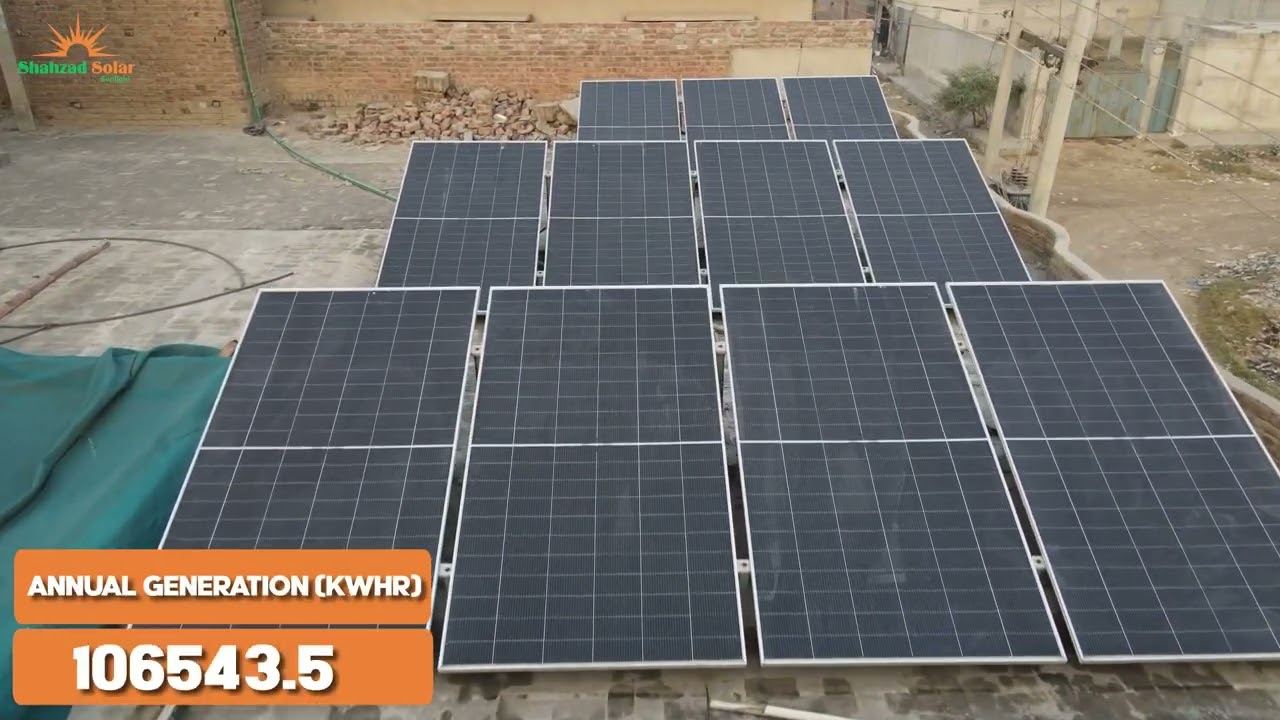
A small rooftop array of roughly twelve solar panels on a flat residential-style roof, not a factory

The "weaving factory" is not a weaving factory

We published a video titled "Weaving factory, Faisalabad". The footage shows a small rooftop array of roughly twelve panels on a residential-style flat roof. It is not a factory, and it is not in any meaningful sense an industrial installation.

The video also carries an on-screen figure of 106,543.5 kWh annual generation. That is not physically possible for an array of that size: twelve panels cannot generate that much energy in a year. The figure is wrong.

We have removed this from our home page and do not present it as a project. It remains described here, in the open, because deleting a wrong claim quietly and saying nothing teaches nothing.

See the footage for yourself

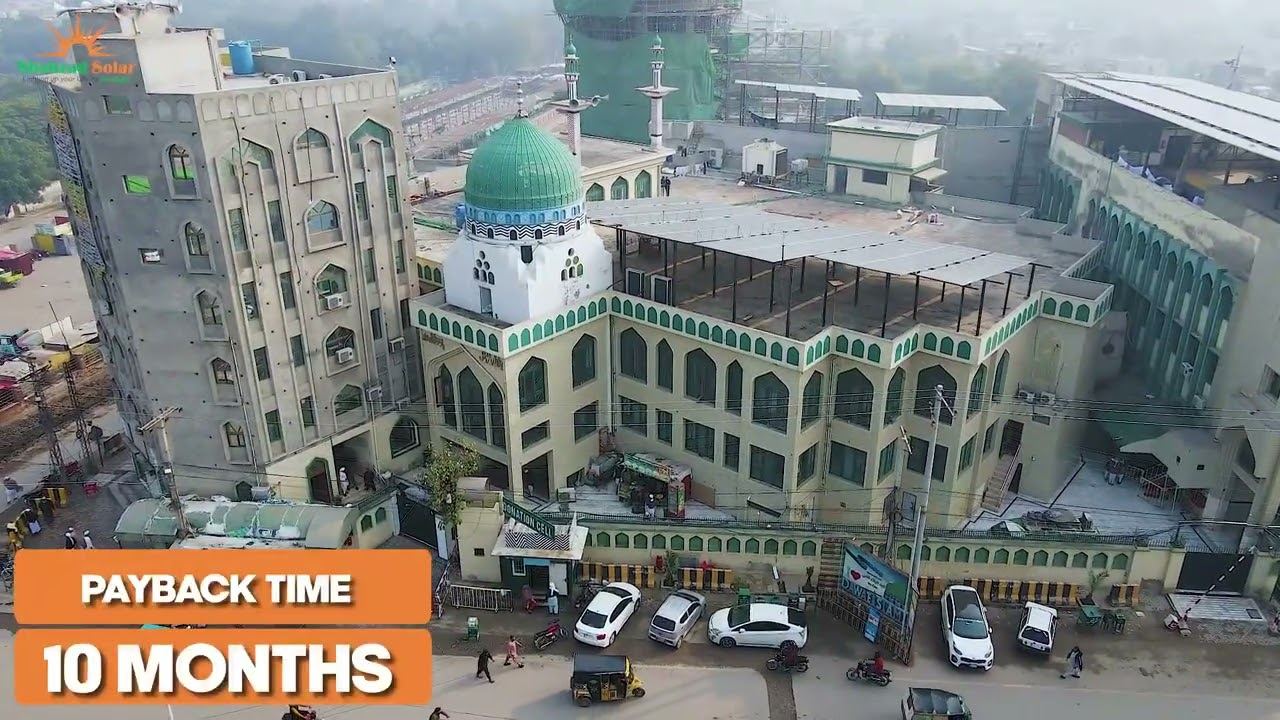
The second correction is smaller but worth stating. One of our videos shows a payback figure of ten months. We have not repeated that number anywhere on this site, because a payback claim depends on the tariff, the load, the installed cost and the export price — and under net billing the export price is the thing that has just changed most. If you see a ten-month payback quoted to you in 2026, ask which of those four assumptions it depends on.

In their words

One customer, on the record.

Video still of a customer speaking on camera about a solar installation by Shahzad Solar

We were very satisfied with Shahzad Solar. They installed a 150 kW system for our hospital and the work was completed professionally. The team was polite and the quality of the installation was good. I would recommend them to anyone looking for solar installation.

Asim Buchanan — published on our own channel, approximately 2024, and reproduced unchanged.

Watch the review

A video is harder to fake than a photograph and it still is not a site visit. It does not tell you how the system has performed over five years, which is the only measurement that actually matters. For that, ask us for an address and go and stand under it.

Video is not a site visit. Ask for the address.

Any installer can show you a video of somebody else's roof. Ask us for the address of a system we installed, go and stand under it, and call the owner on the number printed on the inverter.

WhatsApp Call